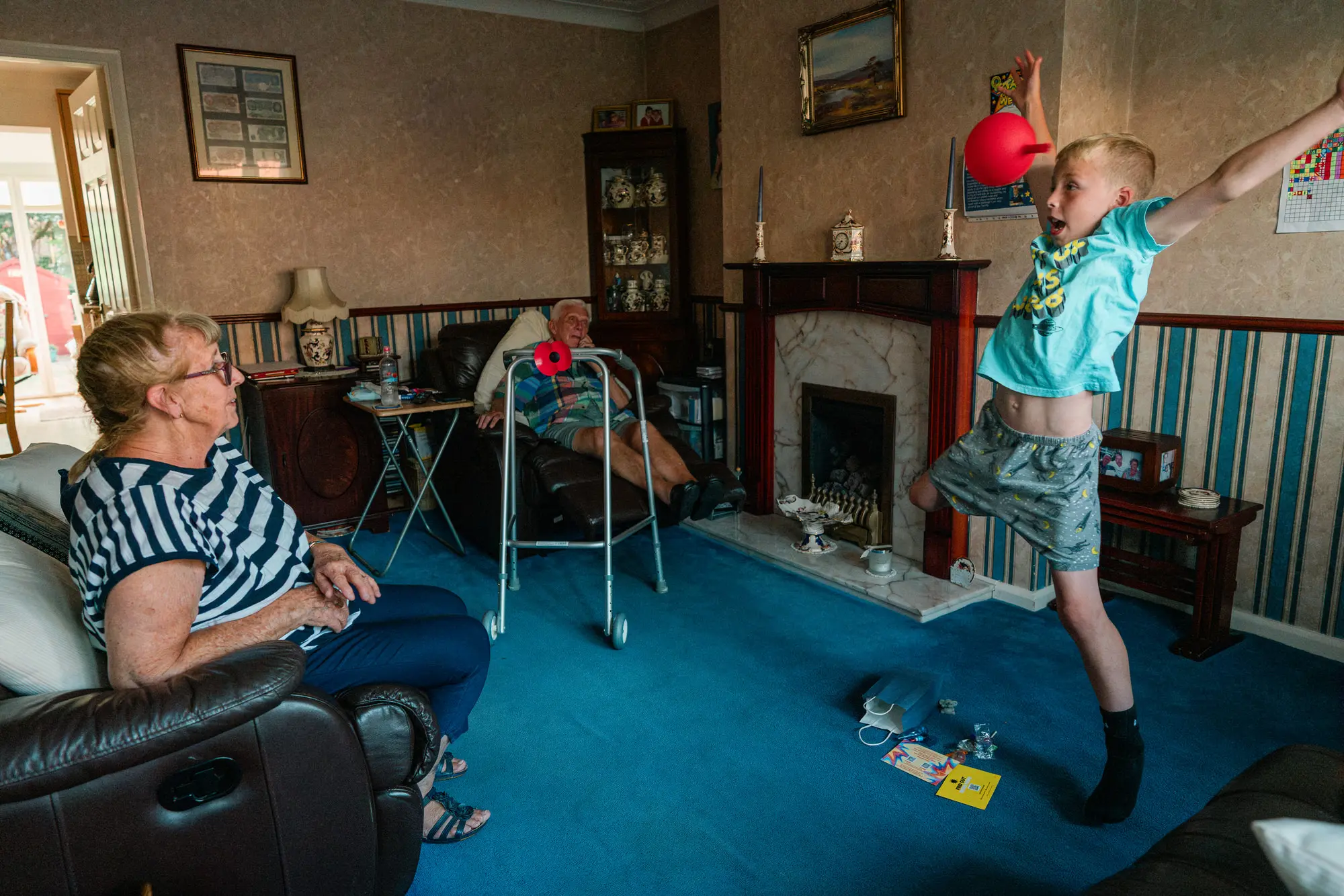
A documentary photography case study on “Unplanned, Unprepared, Unwavering,” Kinship’s Care Week 2026 series
When I saw that Kinship was looking for a photographer to document kinship families for Kinship Care Week, I knew straight away that I wanted to put myself forward.
Kinship care is when grandparents, aunts, uncles, older siblings or family friends step in to raise a child who can’t live with their parents. Most people don’t think about it until it happens in their own family. And it happened in mine.
When I was a teenager, I lived with my grandparents for a year. For a long time I didn’t really talk about it, but it has always stayed with me. I remember that everyday kind of love that keeps a family going, even when nobody outside really sees it.
So I wrote a proposal in response to Kinship’s brief. It came down to me and an agency they had worked with before. Choosing the agency would have been the safer option for them, so I feel really lucky and grateful that they chose me.
The result is Unplanned, Unprepared, Unwavering: seven families, seven stories, launched for Kinship Care Week 2026.
What is kinship care?
Kinship care is when a child is raised by a relative or family friend because they can’t live with their parents. Kinship carers often have very little warning. Many say yes overnight, and take on the emotional, practical and financial challenges that come with it.
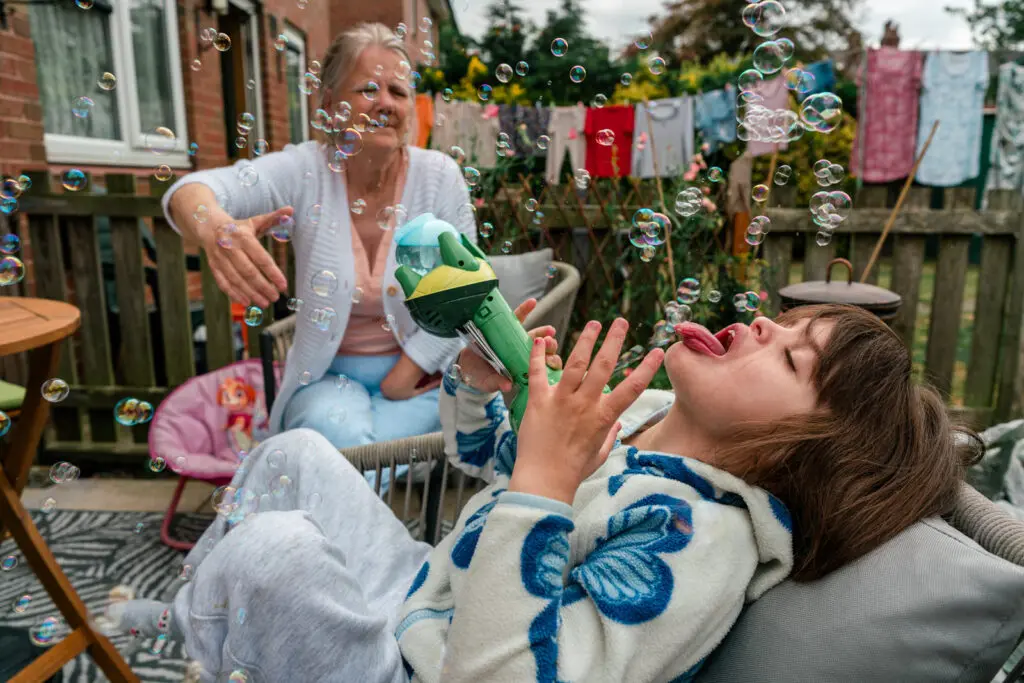
The brief
Kinship is the national charity supporting kinship carers in England and Wales. Their brief asked for a documentary photography project about the moment someone decides to become a kinship carer, and how that decision changes their life: the joy and the gritty reality.
The photographs needed to do a lot. Support a national media story during Kinship Care Week. Help influence government to give kinship carers more support. Raise awareness of what kinship carers do. And possibly become a public exhibition in 2027.
Kinship asked for a tone that was real, empathetic and honest, without sentimentality: gritty, but also hopeful and empowering. That meant two kinds of images: strong, face-to-camera portraits that work for newspapers, and slower, quieter documentary moments of everyday life that could one day hang on an exhibition wall.
It was also important that the focus stayed on the carers, while still showing the children at the heart of their decision, in a sensitive and safe way.
Writing your own brief? Here’s how to brief a photographer for your charity campaign.
My approach: showing what comes after
The brief asked a big question: what happens in those minutes, hours and days when someone is asked to make one of the most life-changing decisions imaginable?
In my proposal, my answer was: you show what comes after.
The decision itself is almost invisible. It’s a phone call, a conversation, a moment. But its consequences fill every day afterwards. The grandmother who now packs the school lunchbox. The uncle who has learned to plait hair. The older sister who, overnight, became a kind of parent. Those were the kinds of images I wanted to make.
The thread I wanted running through the whole series was ordinary love under extraordinary pressure. Not idealised, not bleak, but honest. Light where there is light, difficulty where there is difficulty, and the love that holds it all together.
To tell those stories, I photographed in a documentary style, moving between:
- wide shots that show people in their home and surroundings,
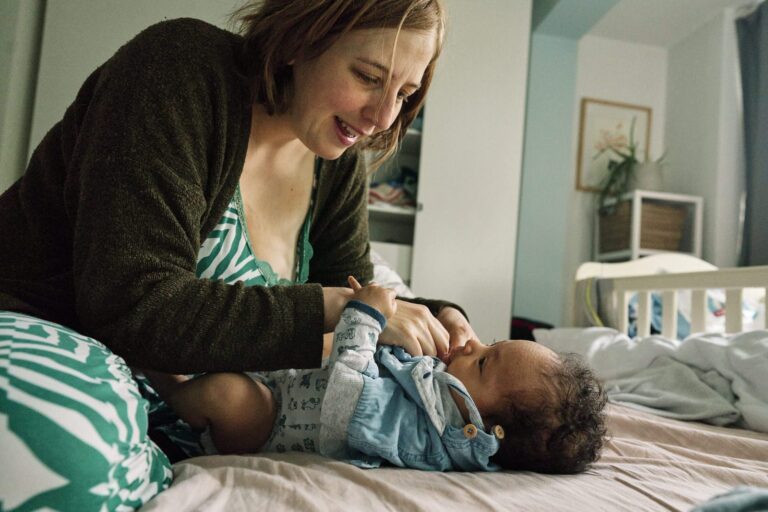
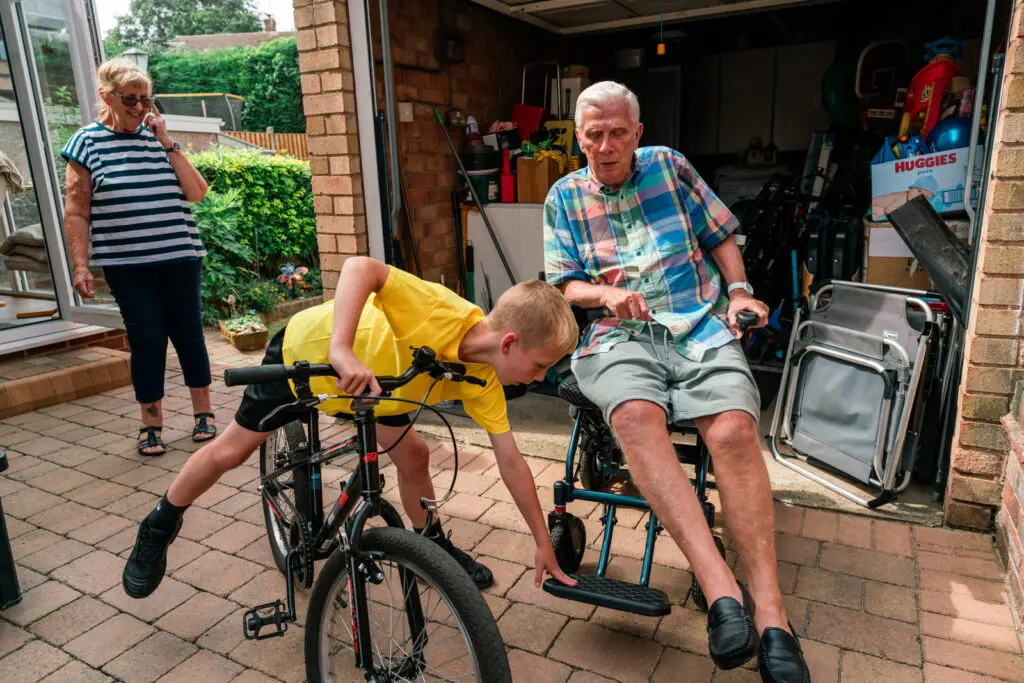
- mid shots that show relationships and interaction,
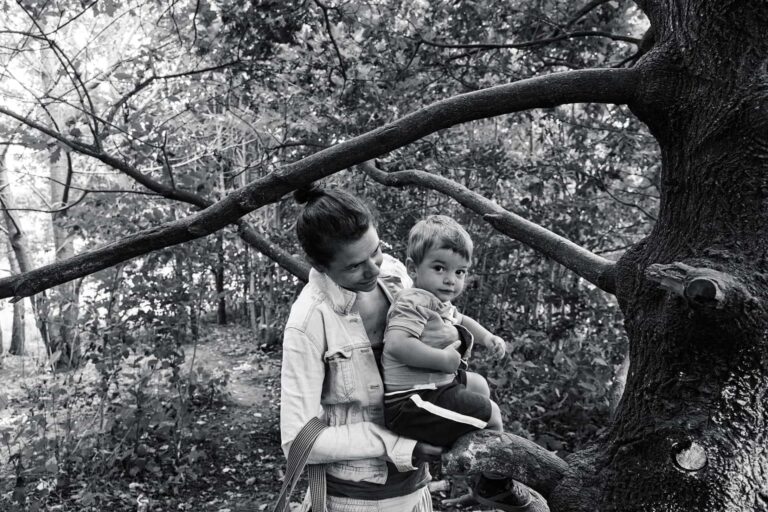
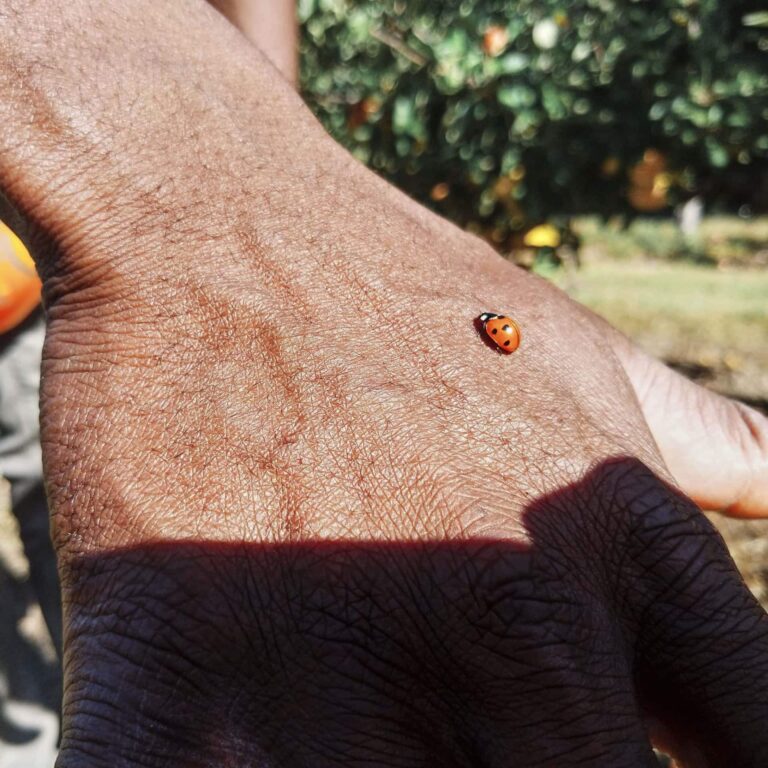
- and close-ups of hands, faces and small details that carry a lot of emotion.
Choosing the families and finding each story
I wasn’t just given a list of names. Together with Kinship, I helped choose the families and decide which story we wanted to tell for each one.
Before I visited anyone, I had a long call with every family. I prepared a guide of questions for these calls, covering five areas: their family and how they came together, their relationship with the child, their practical everyday life, their hopes and challenges, and what would make them comfortable on the day. But they were conversations, not interviews. At the top of my guide I wrote: the most important thing is that the family feels heard.
During those calls, I listened for small details that could become a photograph: a bedtime routine, a weekly outing, a meal they always share. If someone didn’t want to talk about something, I didn’t push. I made a note and respected that boundary. From each conversation, I sketched a rough idea of the story to tell, but that was only ever a starting point. On the day, real life decided what the story was.
The calls did so much more than help me plan. It meant I wasn’t a stranger turning up on the doorstep with a camera bag. I already knew if there was anything sensitive I should be aware of. And every family knew what to expect: who would be there, how long it would take, and what would happen with the photos.
Why documentary, not posed portraits
Apart from the face-to-camera portraits, I photographed this project the same way I photograph all my families: candidly, chatting along the way, with no posed smiles. (If you’re not sure what that looks like, I explain it here: what is documentary family photography?)
For most of my clients, documentary photography is a style choice. For this project it felt more like an ethical one.
Kinship families are often dealing with loss, big changes, and a lot of scrutiny that most families never face, from social workers, courts and a system that can make them feel like a case file instead of a family. The last thing I wanted was to ask them to perform “happy family” for my camera. So I didn’t.
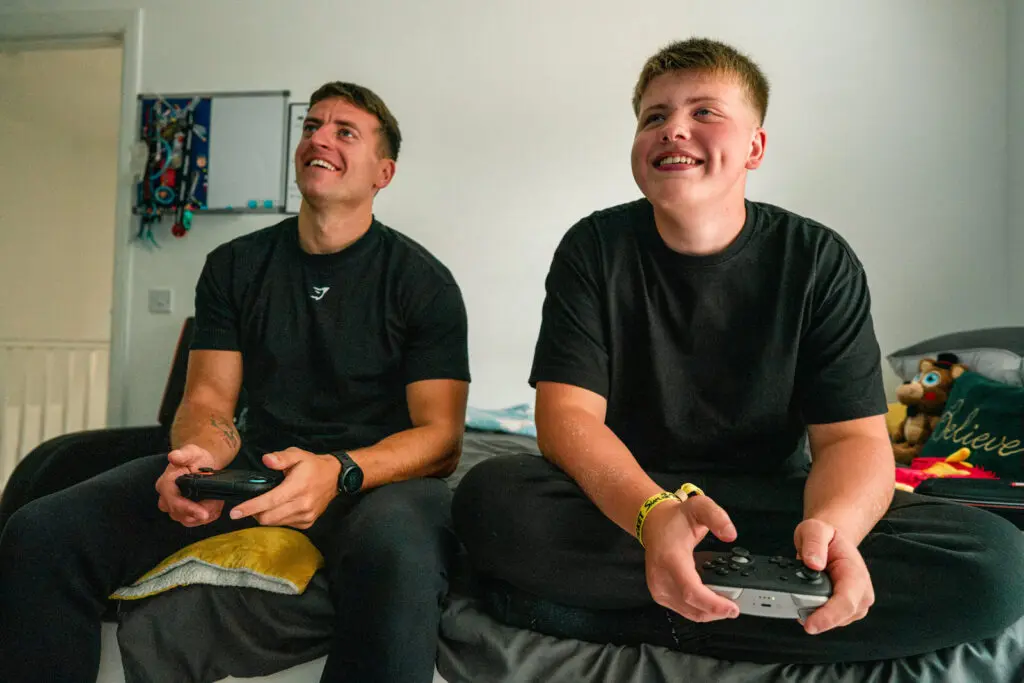
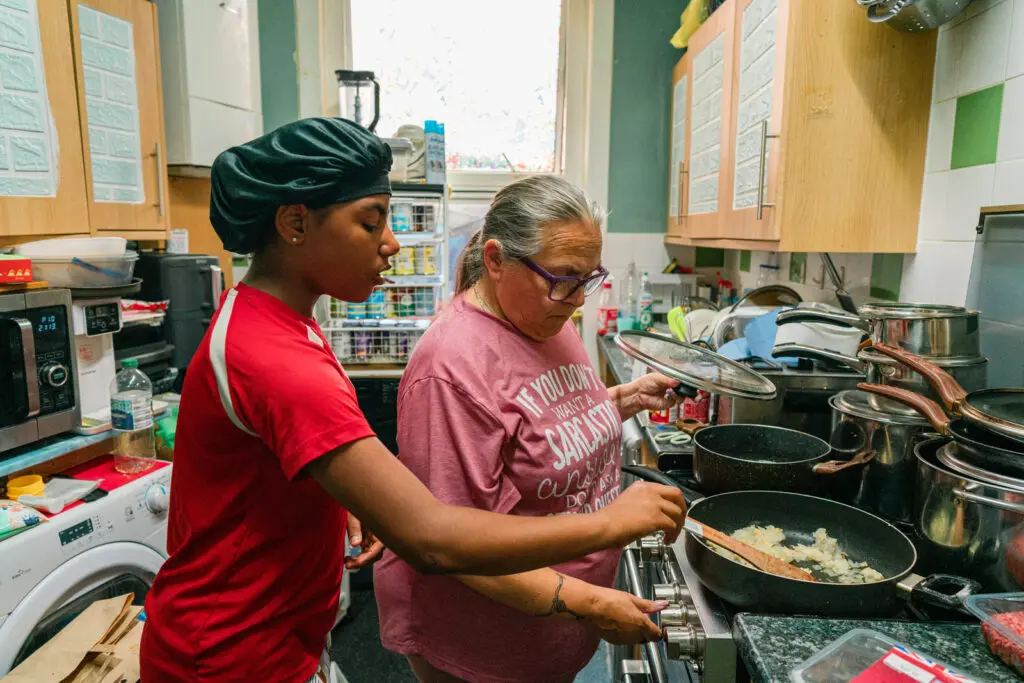
I spent time with each family before I really started photographing, so the day felt less like a photoshoot and more like an ordinary afternoon where I just happened to be there. That’s where the real moments come from: a look between a grandmother and the grandchild she’s raising, an easy moment between siblings, the small rituals that make a house a home. And the difficult moments, a child’s anger or a carer’s exhaustion, are part of the story too. They often show the most beautiful things: the patience, the love, the choice to keep going.
Photographing the children
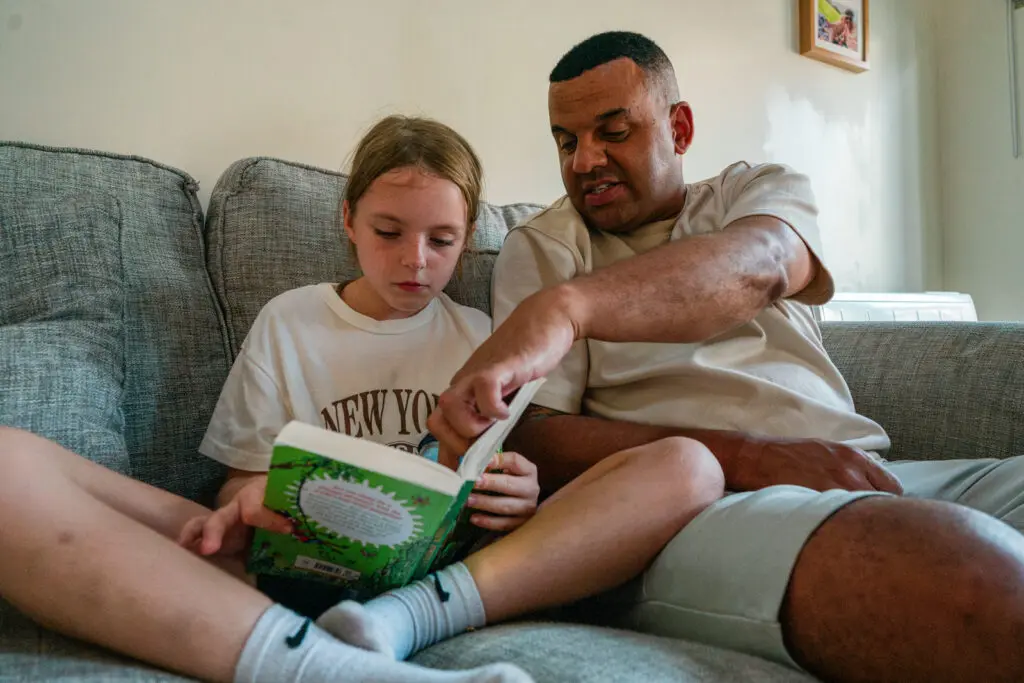
Every family gave permission for their children to be photographed and shown. I don’t take that lightly. For families who have often been through so much, and who can feel so much scrutiny, letting a photographer show their children’s faces is a big act of trust. It meant the photos could show the relationships at the heart of kinship care fully and honestly: the way a child leans into their grandmother, the playfulness between an uncle and his niece.
I still talked with every family beforehand about how they and the children felt about being photographed, and whether any of the children might find it harder. On the day, I followed the children’s lead. If a child wanted space, they had it. Alongside the faces, I also photographed the small details that carry so much emotion.
Seven families, seven realities
No two families in the series looked the same. Some carers had stepped in for a niece or nephew, others for a grandchild or a sibling. What they shared wasn’t the shape of their family. It was the way they had taken on a huge, unplanned change and just kept going. Not without struggle, but always putting the child first.
The sessions took place in different parts of the country, from London to Leeds, Chesterfield and Glasgow, and each one was shaped around the family’s own routine. They lasted anywhere from about three to eight hours. Some families welcomed me for a full day in the life, from breakfast to bedtime; others had a shorter visit focused on a couple of moments we had agreed on together. Both worked, because the point was never to make the families fit a template. It was to be honest about each of them.
What it took behind the scenes
From the outside, documentary photography can look like the easy part of the job: you turn up, you’re present, you photograph what happens. But a project with seven families, a charity partner and a fixed Kinship Care Week launch needs a lot of planning and admin that you never see in the photos.
The timeline. Kinship chose me in May. We spent May and June shaping the creative approach and choosing the families; the shoots happened over the summer, and all the images had to be delivered by 1 September, in time for the media launch in October.
Working around seven families. Every family has its own rhythm, and none of them exist to fit around a photographer’s schedule. Some sessions had to move at short notice because of work, holidays, family emergencies or a carer’s other commitments. Some families needed more time before they felt ready to have someone in their home. Building in that flexibility from the start is what made it work.
Getting there without a car. I don’t drive. I’ve built my whole business around public transport, and for local shoots that’s never a problem. But a project across the UK turns it into a real planning job: train times, connections, and enough time either side of each shoot. When a family lived too far for a day trip, I booked accommodation, always around the family’s availability rather than mine. Arriving on time and relaxed, not stressed about a missed train, means I can give each family my full attention.
Delivering the images. Every gallery had to be edited and narrowed down from a lot more photos than anyone will ever see, then delivered in the formats Kinship needed:
- Low-resolution files for quick review and social media
- Full-resolution, press-ready files for newspapers, magazines and a possible exhibition, often sent in several batches because the files were so big
- Captions on every image, saying who is in the photo and credited as “Kinship carer” rather than by name. That meant checking details, never guessing.
File transfer links also expire, so I kept a close eye on deadlines and re-sent batches when a review took longer than expected.
Staying in step with Kinship. We had regular check-ins, I flagged things as soon as they came up, and I was honest whenever something needed more time.
Everything else. Preparing my kit for homes and light I’d never seen. Keeping receipts for travel, accommodation and editing software organised for invoicing. And fitting it all around the rest of my business, because my other clients and enquiries didn’t stop just because this project was happening.
None of this shows in the finished photographs, and it shouldn’t. But it’s the reason the photography itself could be calm and honest. Everything around it was taken care of, so nobody in front of the camera had to think about any of it.
Consent, trust, and staying in control of their own story
Kinship managed the consent and safeguarding process with each family, and I worked within their safeguarding framework. But for me, consent isn’t just a signature on a form. It’s a say all the way through.
I always work in a trauma-informed way: I follow the lead of the person I’m photographing, I never push for images someone isn’t comfortable with, and I’m open about how the photos will be used. So I checked in with each family again after they’d seen their gallery. Some images were taken out at that stage. Identifying details, like a school visible in the background, were removed when asked. Some families ended up with smaller final galleries because of this, and I kept track of each family’s wishes separately, so nothing got mixed up between seven households.
That never felt like a compromise. To me, it’s simply part of photographing people ethically. (I write more about how I build trust in the power of connection in charity photography and filmmaking, and about consent and safeguarding in my ethical charity photography guide.)
What this project meant to me
I’ve photographed many families over the years, but this project is different. Being let into someone’s home during a chapter of their life that most people never see is a real privilege. And because I understand a small part of it myself, it felt even more personal. In every home I visited, I recognised something: a family that had rebuilt itself faster than anyone could have prepared for, and was simply getting on with loving each other.
The response
When the Kinship team first saw the finished galleries, it wasn’t a polite thank-you. Some of them told me the photos moved them to tears, seeing these families’ lives shown so honestly. That reaction has stayed with me more than anything else, because it tells me the images did what they were meant to do.
One of Kinship’s biggest goals this year was national media coverage, and a feature in The Guardian in particular. And it happened! ‘You have 10 minutes to decide’: answering the life-changing call to become a kinship carer was published on 4 October 2026, during Kinship Care Week, illustrated with my photographs. I hope more coverage will follow.
And as a thank-you to the families, each one will receive a photo book of their own images. It’s a small way to give something back for the trust they showed us.
Why this work matters
Kinship carers hold families together in situations that are rarely easy and almost never seen. Most receive little or no financial or practical support. Photography can’t change that on its own. But it can show a real face, a real home and a real relationship to people who might otherwise only ever hear “kinship care” as a policy term or a statistic. That’s what documentary photography is for: not to make life look perfect, but to show it as it really is, and make you connect to the cause more personally.
See more of my charity photography and filmmaking.